Welcome to LadyTalks, the LadyBeat section dedicated to interviewing women in music and culture, where we talk about creativity, artistic identity, inspiration, community, subcultures and today’s music scene.
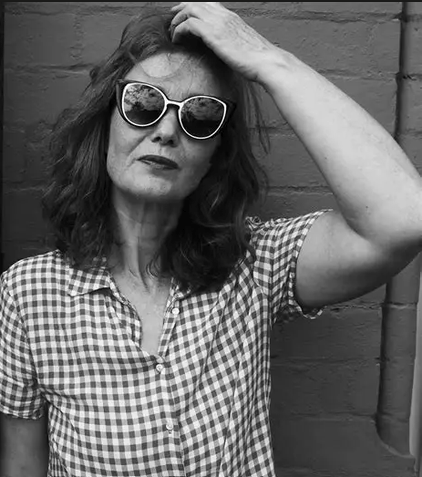
Today, we have Saskia Holling with us. Saskia is a Scottish independent musician and writer who has built her career as a bass player with bands such as Sally Skull, The Nettelles and Lord Rochester, with several records to her name. She has also written two books about female musicians: “Girlsville: The Story of The Delmonas & Thee Headcoatees” and “You & Me Against The World: 2 Women, 5 Bands, ’80s Edinburgh”.
Good evening, Saskia, and thank you so much for accepting our invitation to take part in LadyTalks.
ORIGINS & IDENTITY
I’d like to start by talking about your origins. Where did you grow up? Was there a local music scene? What was it like?
I grew up on Lewis, an island 126 miles off the northwest coast of Scotland – pretty remote! The music we experienced at school was geared towards preparing us to perform at the annual Mòd festival. That’s not ‘mod’ as we know it (the groovy sixties scene) – the Mòd focuses on Scottish Gaelic literature and traditional music. I sang at the Mòd several times during my school years, in choirs and small groups.
In addition to traditional music, there was a local rock scene of sorts. It was dominated by young men playing in guitar groups, covering songs by The Eagles and Lynyrd Skynyrd. They played in pubs and village halls at the weekends, and my participation was purely as an audience member who liked to dance.
What first drew you to music, and when did you realise it was becoming a fundamental part of your life? How did your musical journey begin?
I’ve always enjoyed ‘live’ music, and as soon as I left Lewis and moved to Edinburgh to study, I went out to see as many bands as I could. The genre didn’t matter; it was just a case of absorbing the music, the vitality, the crowds and the dancing – I loved dancing. I kind of dreamed of being in a band, but in my mind it was always as a singer. I never thought about playing guitar – I think because I had never seen many women do it, and therefore it never really occurred to me. I saw The Cramps in Glasgow in 1990 and that kind of stirred something; Poison Ivy was SO cool – a real role model. This, combined with the fact that I started dating someone who was in a band with friends, and they all just played for fun, made me think, ‘Oh, anyone can do this, including me!’ Tom bought me a cheap guitar for my 25th birthday (I was a late starter), and this was 1993. Loads of female bands had started to come over to the UK from the USA and tour – L7, Lunachicks, Babes in Toyland, then Bikini Kill – and it was like, ‘Wow! I want to make THAT noise.’ So I started my first band with my flatmates and a friend from work, and we made some noise.
For many women growing up in music and subcultural scenes during the 1980s and 1990s, there was often a feeling of being one of very few. Looking back, how did you experience those spaces?
The fact that it took me so long to feel comfortable picking up a guitar speaks volumes. There just weren’t that many role models on my radar. In retrospect, in Edinburgh in the late ‘80s, there were young women playing in bands (The Shop Assistants, Jesse Garon and The Desperadoes, The Fizzbombs, etc.), but I didn’t really notice them at the time – I was too busy socialising and dancing.
When I was ready to pick up a guitar, I was lucky because the whole Riot Grrrl scene was happening and, in Glasgow (where I moved to in the early 1990s), there were a host of girl bands forming: Lung Leg, Pink Kross, Hello Skinny, etc. We kind of formed a little community and started to play gigs together – many of them organised by ourselves or friends. In that way, we had a protective space to grow and develop musically. In these safe spaces, we could share our music with each other, like-minded friends and the people in the audience. And we all wrote fanzines! There was always someone to go to gigs with, and when I was ready to play music, there were women to play with. If I had still lived on the Isle of Lewis, this might not have been the case!
How would you describe the experience of women in the British subculture scenes of the eighties and nineties?
We had our own local thing going on, and I think it was more punky and independent. As Sally Skull’s music developed into the late ‘90s, we did become more garage. We had changed drummer and begun to know our instruments better, and this, combined with guitarist Clare’s ‘Girls in The Garage’ influences, changed our songwriting. Then recording at ‘the Toerag of the North’ with Russ Wilkins at the controls cemented that change in direction. BUT, we were based in Scotland and rarely ventured further – we did a couple of UK tours and a French tour, but no scene-y festivals or gigs, so I don’t feel I can comment much on those scenes at that time.
When you started playing guitar, did you feel supported by those around you, or on the contrary, they were discouraging you from playing in a band?
If someone has ever discouraged me, I’ve chosen to ignore it and forget about it!
What were your influences?
When I first picked up the guitar, it did make me think, ‘Where are the women?’ So I ended up scouring second-hand shops and boot fairs for any records with women on the cover – I built up quite a collection, from Bobbie Gentry to the Slits. Clare was a huge ‘Girls in The Garage’ fan and introduced me to those compilations. I had also discovered American bands such as Babes in Toyland, Hole and Bikini Kill, and I liked their attitude and their lack of fear when it came to making a noise, despite the fact that ‘little girls were meant to be seen and not heard’ – fuck that!
In that sense, what is the most valuable message you’ve received, both in music and in life?
“Just do it“.
BANDS, RECORDINGS, PERFORMANCES & GENDER
You have played in different bands. Could you tell us about them? Do you have any
recordings we can share?
1993: First band, fudd – lasted a year; no recordings released.
1994: Second band, Sally Skull – stopped around ’97 or 1998. Released two EPs: ‘Tantivy Track’s’ on Vesuvius and ‘Fractious’ on Slampt.
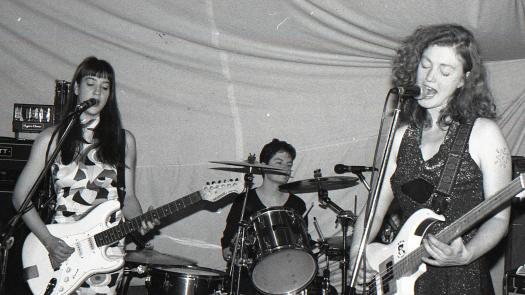
2008: Lord Rochester began performing – lots of releases over the years, which you can find on Discogs. We’re still going!
2015: The Nettelles – formed with Clare Scrivener from Sally Skull and friends Angus and Caitriona. Released a single on Spinout Nuggets and an LP on Back To Beat Records. Clare passed away in 2020, and The Nettelles folded.
2018: Big Lightnin’ started as a way for Russ Wilkins and me to play and create different kinds of music that didn’t really fit into any genre. It helped us through lockdown (lots of videos), and there’s now an album, ‘Original Sin’, released on Spinout Nuggets. We’re playing as a four-piece now, with Mole Lambert and Lois Tozer of The Embrooks joining us on stage.
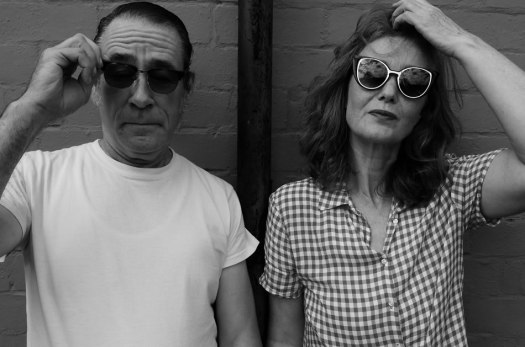
2023: Thee Girl Fridays – I replaced the previous guitarist, and we released a single on Spinout. The band broke up in 2025.
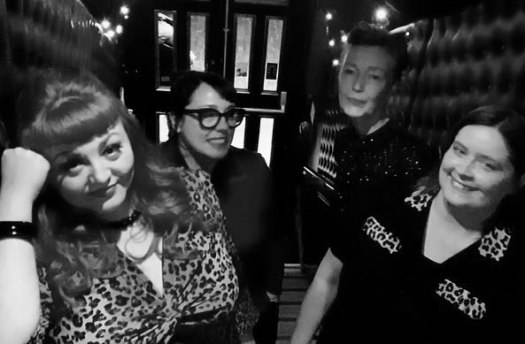
2026: The Gutter Belles with two members of Thee Girl Fridays – no releases… yet…
You have spent many years playing with women in girl bands and also with men in Lord Rochester. What differences have you found between playing in a girl band and playing in a mixed-gender band?
For me, the (mainly) girl bands I was in were a safe place to learn to play an instrument and write songs. There was no judgement, and other band members who had prior musical experience would play new instruments, so we were all learning together. There is a huge amount of creative freedom in that situation.
With Lord Rochester, I initially took a bit of a back seat. I had just taken a 10-year hiatus from being in a band and was learning how to play, write and perform in public again. Now Lord Rochester is three equally strong people – Russ, myself and whatever drummer we are playing with!
Have you ever felt underestimated or treated differently as a woman in music? How did you deal with it?
I have experienced a lot of condescension over the years. Music shops were a challenge in the ‘90s – they just didn’t know how to talk to anyone who wasn’t a white male, so I was often ignored or talked down to even when I knew exactly what I wanted. Sound men (they were always men) during the ‘90s were worse: ‘Sing louder, love.’ Unfortunately, I’ve experienced similar attitudes on recent tours too. I do get annoyed at having to express myself in a more defiant way (knowing it is seen as stroppy) than any of the men in the band do during a soundcheck, but having a good sound is the mutual end goal, so I stick with it. More often than not, the offending soundman will come up at the end of a show and tell me what a great gig that was – it’s like, ‘Yeah, I know what I’m doing!’
Do you feel there is more physical and technical pressure on female musicians than on male musicians?
Also, I actually feel blessed that I never actually achieved ‘success’ in music – I’ve never had to change what I do musically, wear anything I feel uncomfortable in or do anything against my principles because I’m doing it for myself and not a ‘man in a suit’ who wants to make money out of me. It means I’ve always had to have a day job – but that’s OK with me.
I do actually feel more pressure when writing about music. I have to make sure I get every fact right. There is always somebody ready to pounce on a mistake in my work and use it as an example of why a woman should not be venturing into the man’s world of music journalism.
FROM MUSICIAN TO SCENE HISTORIAN
Many people are part of a music scene, but only a few feel the need to document it. When did you realise that it was important to write down and preserve these stories? What prompted you to research and write about The Delmonas and Thee Headcoatees?
I had read a few books about the Medway scene, and they barely mentioned The Delmonas and Thee Headcoatees. I felt that their story was just going to get lost in time and that it would only be the blokes involved in the scene who were remembered. So, I decided to address that, talk to the women involved and write the book.
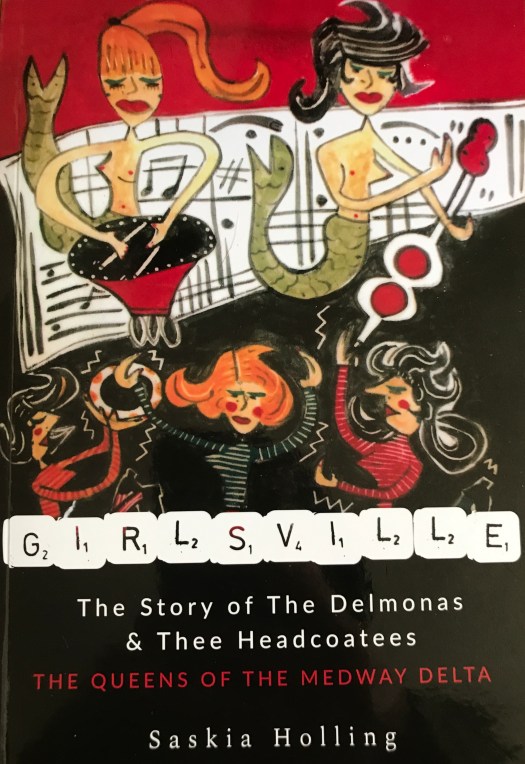
While you were researching, was there anything that surprised you about the way the history of these bands had or hadn’t been told? What gaps did you find in the archives, press or media?
While doing my research, the representation of female musicians in the British press at the time (late ‘80s/ early’90s) shocked me. I felt that this had to be worked into the book and, indeed I have worked this into my second book too. It’s important for people to realise now how oppressive the media was and how amazing it is that so many women actually kept playing and performing despite the attitude of the media and the music business. We have to thank all of those women for being strong and being our backbone.
What patterns are repeated when you look at how the music press has historically treated girl bands or bands with women?
There are several ways the press undermines musical scenes that involve women. They are fond of labelling – attach a label, build a scene around it, then knock it down – and this worked in the ‘80s with ‘Blonde’ and in the ‘90s with the coverage of ‘Riot Grrrl’. Then there are the physical pressure points – focus on a woman’s looks, criticise her dowdiness, wait until she responds by dressing up more, then criticise her sluttiness. I’ve seen this in writing so many times over the years. Then, of course, there are the
descriptions of incompetence – mainly because the older men writing about younger female-generated music will NEVER understand it; therefore, to them it is ‘naive’, ‘childish’ or ‘unprofessional’…
“In my view, it is important for us all to know our history – not just the mainstream or readily available narrative. If you have a passion, research and discover the real story behind it, and don’t let that story be lost.“
As a woman who plays music, I want to know about the women who came before me – there are so many of them. But these stories are not part of the mainstream – you have to dig deeper. If we don’t dig deep and find those stories, then the main narrative will always be that men invented and continue to carry the torch of rock ’n’ roll.
Did your experience as a musician influence the way you researched and wrote these stories? Are there aspects of life in a band that can only be understood by people who have lived them from the inside?
I do think it helps to have experience in the subject you are writing about. In the case of music, experience allows you to cut past the popular perceptions of what being in a band is like, i.e. the ‘glamour’, and talk about the realities: the travel, the waiting around, the good connections, the financial and physical costs….
What did you learn about yourself by moving between the roles of musician and historian?
“That we are all part of history, or, in our case, herstory”.
Do you think that the new generations of musicians have a different relationship with feminism and gender identity than previous generations?
You know, I think these things can come in cycles. In the ‘70s we had punk, which supposedly opened the doors to that generation for anyone to play music – but in reality, very few women were allowed through those doors. Then, in the early ‘90s, we had Riot Grrrl, which was punk for females, and it really did open doors for a lot of young women – I was one of them! On the back of the bands that formed during that period, and the tendrils that were cast during that time, we now have a lot more women in music – because it’s infectious. The more young women see young women playing music, the more likely it is that they will pick up an instrument too.
Girls Rock Schools also started during that period, and that idea slowly spread. In Edinburgh, a school was set up in 2014, and over the years I have witnessed a large number of confident female and non-binary people coming out of that experience to play music loud and proud.
AND I LOVE the fact that a lot of young people are embracing different gender identities and, as a consequence, rejecting the linear stereotypes of the past. The fact that this is now reflected in the music scene through a wide range of different bands is amazing, and I think this gives us hope for a less straight, male-dominated future in music!
YOU & ME AGAINST THE WORLD, YOUR SECOND BOOK
What brought you to write You & Me Against The World after Girlsville? How did the idea for the book come about?
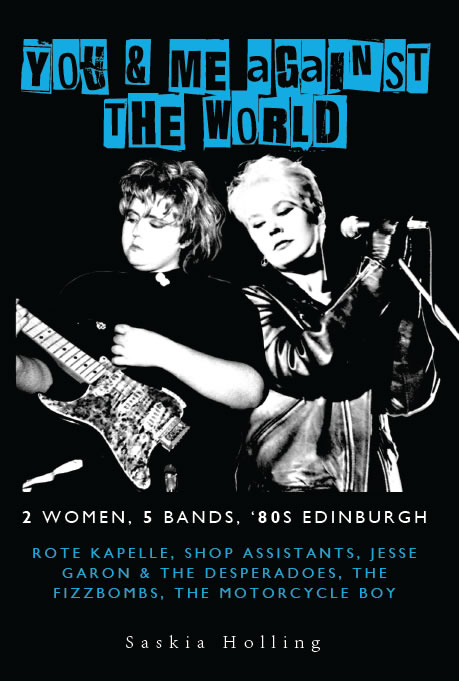
After writing ‘Girlsville’, I had been reflecting on my own musical history, and that brought me around to thinking about my time in Edinburgh during the mid-to-late 1980s. I came to the city as a student and recalled a vibrant music scene (I went dancing a lot!), and that many of the bands featured female players. Thinking about what I had since read in the music press, I thought – what was their experience? And decided to find out.
What story did you want to tell that you hadn’t told yet?
I initially thought about writing the Shop Assistants’ story, but discovered that half of the women involved in that band did not want to talk publicly. Of the two other women who had played in the Shop Assistants, one (Margarita Vazquez Ponte) had been in lots of other Edinburgh bands, playing various instruments, and the other (Alex Taylor) had passed away some time ago with little public awareness, despite the fact that she had brushed with ‘success’ in the music industry. So, I decided to dig deeper and tell the story of the Edinburgh music scene through these two women, who featured in so many of the bands at that time but had two very different experiences.
Many rock stories focus on individuals, leaders or stars. Your book seems to focus on human relationships. Why do you think those stories tend to be ignored?
It’s easier to write about one person! But if that one person worked totally alone, their output would be quite different. Some people do that (create alone) – but most of us require other people to bounce off, contribute, or at least play what we have asked them to do. All of these situations mean that another person is bringing something else to the mix and taking that creation somewhere else. Always.
What role does friendship play in the survival of underground scenes?
Essential. Who are you going to ask first if you need another band member or someone to help organise a gig – someone you know and trust.
For someone to achieve their creative ends without friendships, they would have to be incredibly talented or ruthlessly ambitious! They do exist, of course, and these are often the people we hear about the most…
But in a small, non-commercial musical scene, relationships are as important as the music – the scenes would not exist without each other. They are symbiotic.
Friendship and community..Do you feel part of a community?
Very much so – and what is nice is that some of the people in this community I met over 30 years ago, when I first started playing music. We’re all growing old disgracefully together – ha ha!
How do you see the music and cultural scene in your country right now?
There is a good network of dedicated and hard-working people keeping an underground scene alive, whether they are writing songs, recording music, putting out records (and books!), or running gigs in various cities. This is despite the reduction in available venues and increased travel costs for bands, even within the UK.
TECHNOLOGY, MEDIA, AI & FUTURE
Technology, media and culture: how do you feel about the impact of social media and algorithms on music and artists today?
It’s a mixed bag, isn’t it? In some ways, social media is an amazing tool for getting your music and events out there to like-minded people. On the other hand, there is sooooo much ‘out there’. However, I appreciate it in a small-scene way, where it is easy to click and connect with like-minded people. If I was trying to ‘make it’ (not that I ever would!), I’m not sure where I would start in terms of trying to make myself stand out in the crowd – unfortunately, I think this is why some people go to extremes in terms of dress and content in order to do just that.
What about AI?
AI? Terrifying. The effect it is already having on the creative industries is apparent, and this is only going to intensify. It means that people who actually make a living out of music (from film scores to band artwork) will not be able to do that for much longer. Also, people who receive any (small) income from streams and radio play will start losing out as AI starts to favour AI-generated music in its selections. I’m not sure if there is any answer apart from trying to avoid the use of AI in a creative setting at all times.
“The one positive is that the live music experience will become more precious, as this is the only thing that AI can’t replicate…“
How do you see yourself in 5 or 10 years?
Hopefully doing the same thing! Still writing about women in music and playing music too, and appreciating all the people who help me make these pastimes public!
How do you see the scene in 10 years?
More diverse, hopefully, as the progress made in the last 10 years spreads, takes root and encourages further involvement from people of different genders and backgrounds.
What would you say to younger women trying to find their own voice in music today?
“Find a tribe: people you feel safe expressing yourself around and who will provide mutual support. If possible, do this offline…“
Thank you so much, Saskia, for your insights and time. Luckily we will have Lord Rochester in Spain very soon this year.

