Welcome to LadyTalks, the LadyBeat section dedicated to interviewing women in music and culture, where we talk about creativity, artistic identity, inspiration, community, subcultures and today’s music scene.
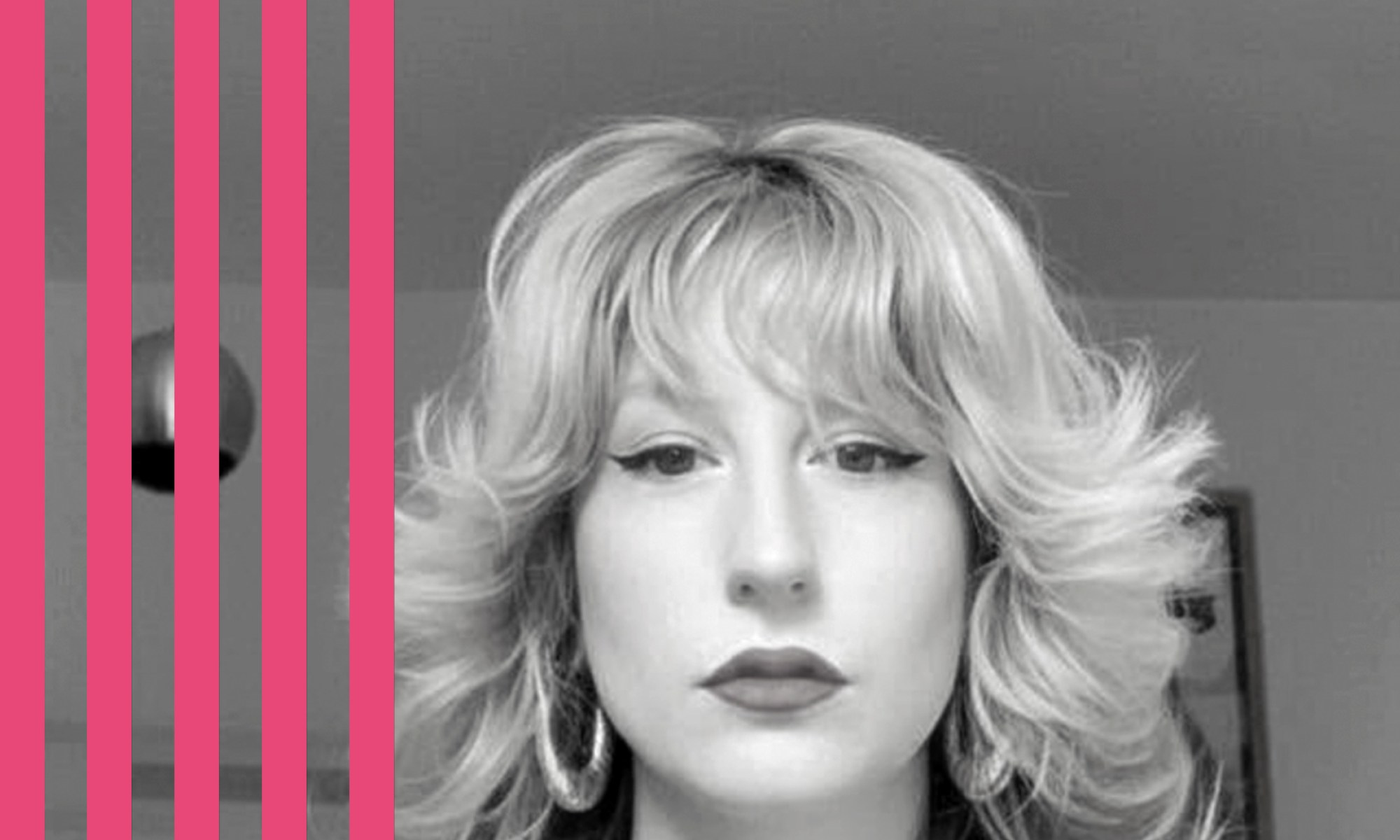
Today, we have Oihane Follones with us. Oihane is a Dj & musician, who has developed her career between London and Berlin.
Good evening, Oihane, and thank you so much for accepting our invitation to take part in LadyTalks.
ORIGINS & IDENTITY
I would start talking about the origins, Where did you grow up? How was the scene where you grew up? What sounds reminds you of your childhood? Was there a local music scene? How was it?
I was born in Iruña – Pamplona, Basque Country, I lived there till I was 18. There was a lot of music in my house. My dad is into 60s and 70s rock (Eric Burdon & The Animals, The Rolling Stones, CCR etc) and my mother would listen to anything done by a woman (Patti Smith, Janis Joplin, Joan Baez etc.). They had a good collection of vinyl Lps. One of my first memories of going through their vinyl collection was being shocked by the cover of Salve from La Polla Records (a priest holding a burning cross above his head). I saw The Sex Pistols on tv and I asked my dad the name of the band. A week later I bought their LP. After that my older cousin gave me some cassette tapes of Basque punk bands like Eskorbuto, Cicatriz and RIP. I was hooked. There was a music scene when I was growing up. Barricada were pretty big, Tijuana in Blue, I also remember the last show from Kortatu, in my home town, “Azken Guda Dantza”, in ´92,
When you were a teenager, what attracted you first: the music, the aesthetics, or the sense of belonging offered by subcultures? What did you fin in the music scene that catch you and made you stay?
I think it was a combination of several things: the music, the aesthetics, the attitude, and above all, the opposition to the status quo. Punk offered a way of questioning the world around me and expressing that you didn’t necessarily accept the rules you had been given. My family and my surroundings were heavily politicized, so in many ways punk rock felt like a natural extension of the values I was growing up with. There was a progression between what I was seeing and discussing at home and what I was discovering through music. The politics I was exposed to in everyday life found another language in punk. At the time, the Basque Country was experiencing several important social and political movements, including the movement of resistance to compulsory military service (movimiento insumiso), as well as activism in support of Basque political prisoners and the Basque language. There was a strong culture of protest and political engagement, and music was very much part of that environment.
Punk wasn’t just something I listened to. It was a way of expressing disagreement, questioning authority, and making a statement about the kind of world you wanted to live in. And the aesthetics were equally important. The way you dressed, the bands you listened to, the places you went, and the people you surrounded yourself with all became forms of self-expression and ways of identifying with a community. I think that combination is what caught me and made me stay: music as protest, aesthetics as expression, and a community built around shared values. Punk gave me a language for things I was already feeling and thinking, while also introducing me to people, ideas, and possibilities that expanded my world.
For many women growing up in music and subcultural scenes during the 1980s and 1990s, there was often a feeling of being one of very few, you are younger, how was for you and teen girls of your generation? Did you find more women in the subcultures to hang around and go to concerts, or was it sometimes a solitary journey?
I was going out with a mixed group, we would spend most of the time in the gaztetxe (squat / youth center) watching movies, listening music, smoking… we will exchange cassette tapes. On the weekend we will go to shows. There were some girls in the group, but it was mainly boys. But I don’t remember being treated differently, at the end of the day the music and our values were more important. We all believed in equality and we tried to be as coherent as we could.
This dynamic went on till my 30s, I was hanging out with mostly guys till I started missing having women around me. Along the way I met some amazing women that shared the same passion and taste for music. Nowadays I would say that most of my emotional support is provided by women.
Who were your female role models during those years? Did they exist, or did you have to find them?
I’ve always had strong female references in music, which is one of the reasons representation is so important to me. Growing up, I could see women taking their place in music and challenging the idea that rock was a male space. In the ’90s, there were bands like L7 and Lunachicks, and Poison Ivy was also a huge reference for me. Looking further back, there were women like Joan Jett, The Runaways, and Suzi Quatro, who had already paved the way and showed that women could be at the centre of rock music.
I also had references that felt much closer to home, such as Ana Curra and Las Vulpes. Seeing women from our own cultural and musical environment making music, taking up space, and challenging conventions was particularly powerful.
MOVING TO LONDON
You have developed most of your music career in London and Berlin. How was it, when and why you took the decision to pack your luggage and move to London. What did you find there and made you stay so long?
I wanted to live in a big city. My hometown was too small for me. I also wanted to study cinema and at that time was only possible in Madrid or Barcelona. I moved to London because of its music history and also with the perspective of going to uni there. Straight away I found my people. I went to university and right after that I started working at a record store and also I got involved with the Dirty Water Club.
How was the experience of working on a record shop? What kept you doing it?
I started working at Sounds that Swing right after university. The real mind expanding and learning happened at that record store. I endless hours listening and learning so much about country, blues, rhythm and blues, rockabilly, rock´roll, 60s garage, and power pop. It was like the best music library you could have. I could deep dive to the bands that influenced my favorite punk bands. I was able to connect the dots and see how music has been evolving but it all comes from the same human needs and feelings, and how music is an essential part of youth culture.
Then you move to Berlin; what makes you move there, what did you expect to find and what you found?
After living in London for 12 years, I was exhausted. It felt like a constant struggle. The high rent, the stress etc I got very tired of it. I was looking for an improvement on life quality. And I got that in Berlin. Cheaper rent means less stress, more free time to do other things like having a band, or do shows. I was very lucky because I moved once I got offered a job at a record store that was inside a cool bar, so that was the meeting point and hang out place of many friends and like minded people. Berlin still feels very much like home 14 years later.
Berlin is a vibrant city with a great underground life , in the late years the city is changing very fast, how are these changes (gentrification etc) shaping night live and music scene?
Some small venues and projects have been closed and evicted. Now a whole area is at risk, that’s the price of gentrification and can be seen in every city, but luckily in Berlin in the 90s when the wall went down and lots of spaces were empty, they got squatted, and a good amount of them ended being bough by the people living there, becoming house projects, Kastanien, Supanolly, Schokoladen etc and more recently Tuntenhaus. These places will always be there.
Have you seen many difference in the music scene between London, Berlin and Spain?
I can only speak of my experiences here, this might differ from other people´s perspective.
Basque Country, very politiziced environment, the music scene pretty mixed but because it is a small place, so if you are into the wide rock music umbrella, everyone is welcome, the punk, the metal head, the hippy etc We will travel for shows to Donosti, Bilbo, Gares, etc. As the scene is smaller more diversity and everyone will go to shows because they don’t happen that often.
London was a bigger city, so you could find all sorts of subcultures, rockabilly, pychobilly, mod, skin, punk, metal… you name it. Sometimes they will all come together at the Elephant’s Head. Lots of shows, but not that many touring bands, as the conditions are pretty tough. Some great clubs like Club for Losers, Dirty Water Club, Mousetrap, Neat Neat Neat and Garageland.
Berlin, lots of shows, both commercial bands and a very healthy diy scene. Because it is in Central Europe way more touring bands than in Basque Country and London. There are still lots of undiscovered scenes for me like for example the goth and metal scenes. Techno is the main thing in Berlin but still a huge punk, hardcore and post punk scene.
Djing and record buying-digging-collecting
When did you start to Dj and how was it?
I started spinning records in London, in the early 2000s. A friend had a night called Club for losers. I started doing there and then once I started working at Sounds that Swing I started to dj 1 hour at the Elephant´s Head on Saturdays when Mouse was djing there. When Mouse stopped doing that night I took over with another lady, Tracy Dick and we will do one Saturday each.
After so many year Djing have things change? (scene, parties, festivals…) Also how does your style change along this years? Which is your top moment as Dj, not to forget and which are your favourite places to spin records?
I don´t know if it has changed, there are still djs playing only vinyl. I think that will always be there. My style has changed over the years by the requirements of the job. The Elephant¨s Head gig I London was a proper job, 5 hours, and good money but it required a specific kind of music. In Berlin I had more freedom to play what I wanted, so I was able to play more of the stuff that I collect, 70s punk, pub rock, powerpop and junkshop glam.
My favorite places to spin are Fantastic Dracula Carnival in Benidorm, Get Lost Fest in Hamburg and the last 2 years I died at this cool DIY festival in Mannheim called Pfingsfest.
Which is your worst experience and what did you learn from it?
My worst dj experience happened a couple of years ago in Berlin. There was this soli party and I played with my band and then I was meant to dj at 2am. First they told me there was a delay, and I ended up waiting for four hours till they told me they only had one set of turntables and there were being used in another room, the techno room. Luckily I had friends that stayed with me. So at 6am we went home.
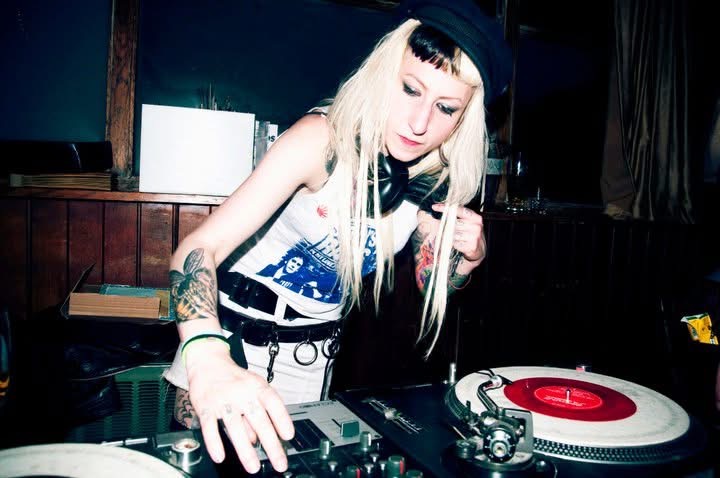
Nowadays there are much more women Djing, do you think there is still a difference on the line up in the festivals, or payment with male djs?
I am not going to name names but there was a big festival in Spain that contacted me twice to dj, but then there were offering so little money that it wouldn’t even cover my flights. The second time they contacted, they had only one female artist in the bill, so it really felt they wanted to fill the quota with me.
Then there is another festival, smaller and more DIY that has only female djs, which is pretty cool on paper, but they have no money for the djs, no flights, no accommodation, nothing. I understand that the ticket sale money should go toward the bands, but the djs keep the party going, people stay because they want to dance and they want to carry on drinking. The bar is doing money because of us. They should make a deal with the bar so we get paid for our effort.
What keeps you Djing? Still find the fun packing records and lifting heavy bags? How do you prepare the records for a set? What do you love most and least about DJing?
Different places have different soundtracks. It helps to know where your gig is, what kind of music they usually play there. Also I regularly buy records, so it is always good to play the new additions to the collection to avoid getting bored of your own sets and records. There was a moment in London that I would dj every weekend and it started to feel like a job, but once you start playing, that feeling was gone. Nowadays I don’t dj as often so every time is special.
Now that there’s a revival of DJing with records, do you think it’s a passing fad, or will this generation, born and raised listening to music digitally, truly embrace physical formats (records, singles, etc.) in the long run or is just a social media trent?
I am not in tune with trends so from my perspective the vinyl format has endure the test of time. People that were listening to Cds are streaming now, but we have proven that the analog format that has lasted longer and had a very healthy comeback is vinyl. I like to dj with only 7”s because they are easier to carry and to play. 7”s are how kids will spend their pocket money while they were waiting for the LP to drop. We need to make music affordable for the youngsters if we want the next generation to carry on listening to vinyl records. Any subculture is youth culture, so let’s make music and vinyl accessible and affordable to young people. Let’s do good sounding reissues. I am not an elitist, I don’t think a dj should play only original 7”s that cost a fortune. Let’s stop speculating with music.
Where do you get your records? Shops or on line? what do you prefer and why? Which is your “santo grial” still not found ? which records do you love buying?
Nothing beats the experience of going to a record store. Sometimes I do buy on discogs and online but I find it a more fulfilling experience to go to a record store. I was in New York recently and found some killer records, some of them have been on my want list for a long time like Stormy by The Jesters of Newport or Security by Thane Russell. I have a want list on discogs, but the prices are astronomical. Something I started doing a few years ago was to do dub 7”s of records that either only came out on Lps or are too expensive to buy.
PLAYING IN A BAND
What aimed you to play in a band and why did you choose drums? Tell us about starting to play.. did you feel supported by those around you, or on the contrary, they were discouraging you from playing in a band?
I wanted to play drums already when I was in London but I didn’t find the time, the energy or the right people to do it. A few years later in Berlin, I went out to a show with the sister of my work colleague from the record store, I already knew her band The Inserts and she said they needed a drummer. I told her I didn’t play, but that I would like to and she said everyone started playing their instruments with this band. So I joined and they were very encouraging and patient with me. It is more than a band, it is therapy, support group and a beautiful friendship all together. I found the right people. I had a short lived band with all guys called The Bakers, it was fun but totally different vibe. They all were more experienced musicians, so there were dirty looks when I will make a mistake.
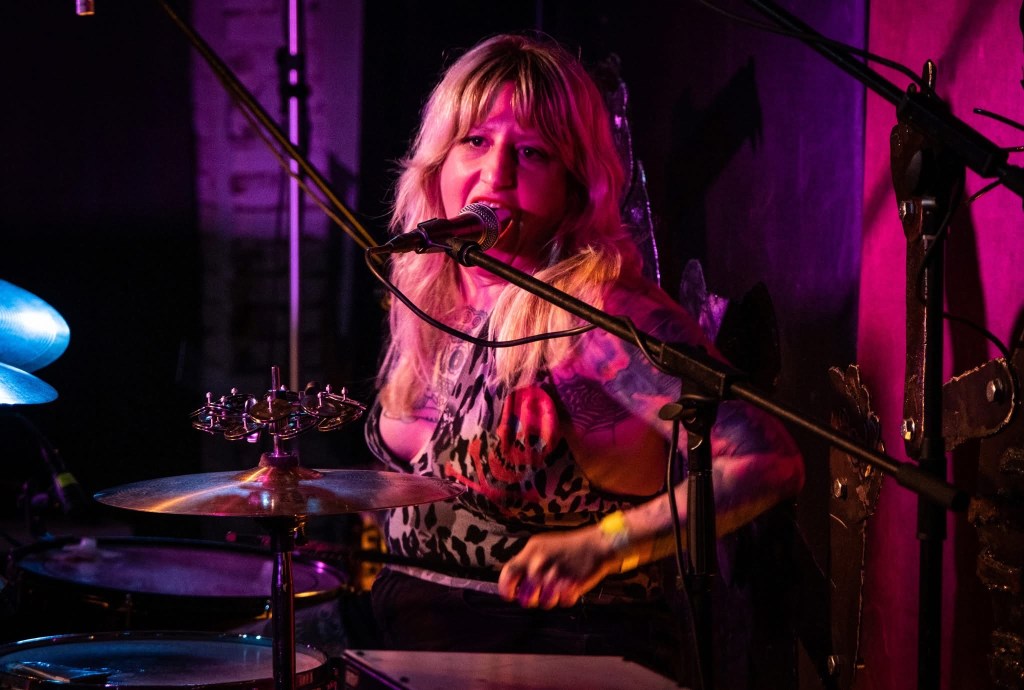
Which were your influences/ references? In that way, which is the most valuable message you’ve received, both in music and in life? did you feel you had to prove yourself more than your male bandmates to be taken seriously? Looking back, what strategies did you develop to make your way in environments that could be very male-dominated?
My main influences are Nick Knox from The Cramps and Peggy O´Neill from The Gories. I have a long list of references: bands like The Slits and The Go-Go´s and then people like Toody Cole, Paloma Borbone, Alicia Armendariz, Tina Lucchesi, Miriam Linna… and many more!! I guess you can check the blog to find out about them.
Were there times when you encountered prejudice or specific expectations for being a woman in a band and even playing in a “girls band”?
Sometimes they only call us to open for other bands with women. There is a festival in Berlin called “Female fronted is not a genre” and that’s spot on because some promoter only think of us when there is a mint band with women on it, without thinking on the music that we do. Other times we had older guys try to complement us in a manner that sounds like a back handed complement. But we don’t care, we are not here for validation. We are here because we enjoy playing music together.
RUNNING A CLUB AND BUILDING COMMUNITY
You have been organizing shows and running clubs, it is also a very masculine “activity”, tell us about your personal experience and the importance of building a community
When I first arrived to London and found the Dirty Water Club I felt right at home. I was lucky enough that when Jackie had her daughter she ask me if I wanted to be involved and for a few years we did a 60s garage and punk night every Friday and The Boston Music Room. Billy Childish played every month. We got The White Stripes before they got super famous, The Monks, Radio Birdman, The Black Lips, the train wreck that was Kin Fowley… Good stuff!!
I was also involved in a group that did raves or queer squat parties, called Behind Bars. We used to rise money for different political causes with those. We will have an electronic room and a punk / post-punk room. That went on for few years too.
Then when I moved to Berlin, I did some diy shows for Wild Wax, but I guess the biggest achievement was a Hardcore / Punk Festival we did for 3 years called Nothing Nice To Say (2016-2018). The main core were 5 friends and ten lots of volunteers during the festival. The first years we didn’t have any budget and we call all our friends, mainly in Europe to come and play. The female representation was very low, and we made a note of it. The second year we made sure there were women in all the show (we had a main show at SO36 and then many after parties) and then on the 3rd and last year it happened organically, they were women in bands, doing sound… it was pretty cool.
I don’t have much time at the moment to do shows but I am still doing one party a year called The Queer Gala or The Queer Takeover. We usually rise money for different causes.
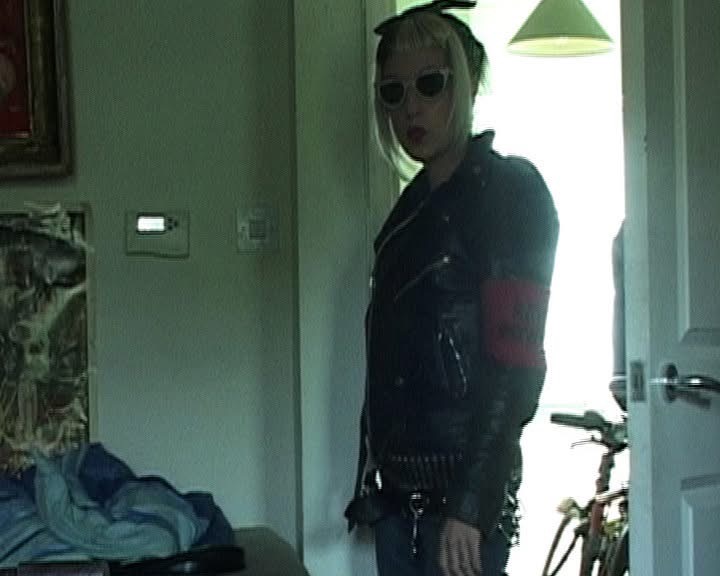
You have shared stage, clubs and festivals with people from different generations and social background, what have you learned from older friends and what can young people do to contribute to keep the scene?
I think now, more than ever, it is important to build places where people come before profit—places that are not designed to generate economic value, but to create social, cultural, and human value. These are places that belong, in some meaningful way, to the people who build them and participate in them. It can create opportunities to learn, to create, to meet others, to develop skills, to take responsibility, and to feel that you have a genuine stake in something larger than yourself.
An essential part of this vision is the generational passing of the torch. Every generation inherits places, knowledge, traditions, relationships, and institutions that were built by those who came before. But inheritance should not mean simply preserving what already exists. It should mean being given the opportunity to participate in shaping what comes next. Young people should be able to sit at the table, contribute ideas, organize projects, make decisions, experiment, fail, learn, and eventually lead. There is something powerful about a place where someone can arrive at sixteen or twenty years old with an idea and, over time, become one of the people responsible for carrying that place forward. That is how culture becomes alive.
VINYL CUTTING
Record shop attendant, promoter, drummer, dj, and now.. Vinyl cutter? What can you tell us about this?
Lathesville is a mastering and lacquer cutting studio based in Berlin, founded in 2022 by Alberto Wowsville and myself. Combining decades of experience in audio engineering with a deep connection to vinyl culture, Lathesville specializes in mastering and precision lacquer cutting for artists, pressing plants and independent labels. As a woman-managed independent space within a traditionally male-dominated part of the music industry, Lathesville is committed to creating a different kind of environment—one built around respect, collaboration, accessibility, and meaningful relationships rather than hierarchy and profit. The studio works closely with artists and independent labels, supporting their ideas while keeping the human connection at the heart of the process.
WRITER AND RESEARCHER
We love your blog “I Am In The Band : Tales of Rock’n’Roll Women“. When did you started and what fueled you to do it? Do you think that women have been underrepresented in the history of music or that they have been narrated from the wrong perspective
The idea for the blog started after a conversation with my mother, when we were talking about the importance of women in music and the ways they have historically been treated and represented. That conversation stayed with me because it made me think about how much of music history we inherit through a particular lens—and how many stories are missing, minimized, or told from the wrong perspective. I started to realize that women have not only been underrepresented in the history of music; very often, the way their stories have been told has been part of the problem. Women musicians have frequently been described through their relationships, appearance, sexuality, personalities, or the men around them, rather than through their music, creativity, work, and influence. Even when they have been hugely important to a scene or movement, their contribution can become a footnote while the stories of their male counterparts are treated as the main narrative.
The blog grew out of that desire: to listen, document, connect generations, and make visible the women who have always been part of music culture. It is about making sure that the next generation doesn’t have to discover these stories by accident, and that young women can look back and see that there have always been women making noise, taking risks, creating their own spaces, and changing music.
What patterns are repeated when you look at how the music press has historically treated girls- bands or bands with women?
The patterns that are repeatedly seen in the way the music press has historically treated girl bands and bands with women are objectification, sexualization, trivialization, and exploitation. Women are often presented first as something to look at rather than as musicians, artists, or people with something meaningful to say. Their appearance, sexuality, relationships, clothes, and personalities can receive more attention than their songwriting, musicianship, creativity, or artistic vision. They are often expected to fit a particular image or stereotype in order to be considered marketable. At the same time, women in music have frequently not been taken as seriously as their male counterparts. Their success can be framed as a novelty, a trend, or something manufactured by the industry rather than as the result of talent, hard work, and artistic development. Even when women are clearly creating and leading their own work, there can be an assumption that someone else—usually a male producer, manager, label executive, or musician—is really behind their success. This connects to a broader pattern of economic exploitation. Women can be encouraged to enter the industry without being given the same access to information, power, negotiation, or fair business arrangements. They may receive unfavorable contracts, inadequate compensation, or less control over their music, image, intellectual property, and careers. The industry can benefit from their visibility and labor while giving them less ownership and decision-making power in return.
Another repeated pattern is that women are often discussed in relation to men. Their identities can be reduced to who they are dating, who they are collaborating with, who discovered them, or which male artists they are associated with. This can obscure the fact that they are creators in their own right. So the issue is not simply that women have sometimes been portrayed negatively by the music press. It is that there has historically been a wider system in which women’s bodies and personalities are treated as marketable assets, while their creative and economic agency is undervalued. That shift—from women as objects within the music industry to women as artists, decision-makers, owners, and leaders—is fundamental to changing the pattern.
AESTHETICS
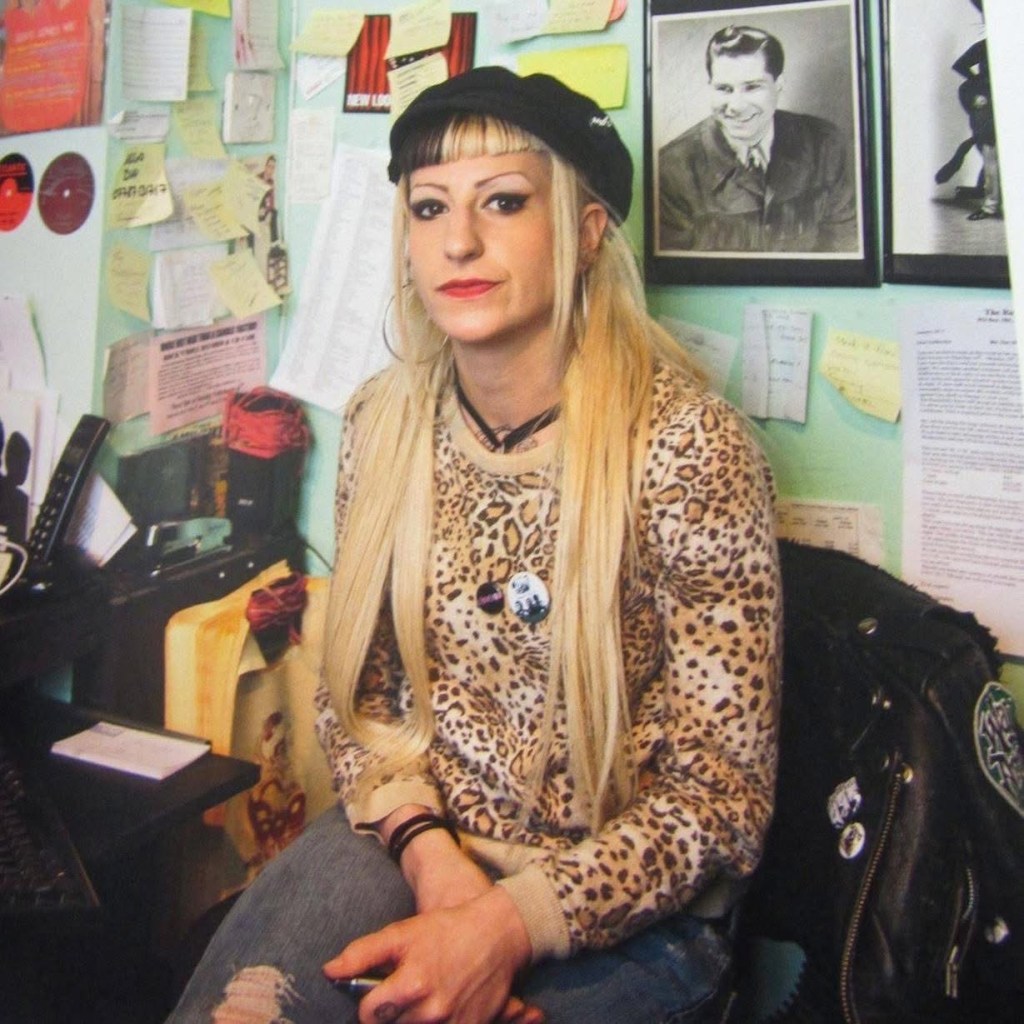
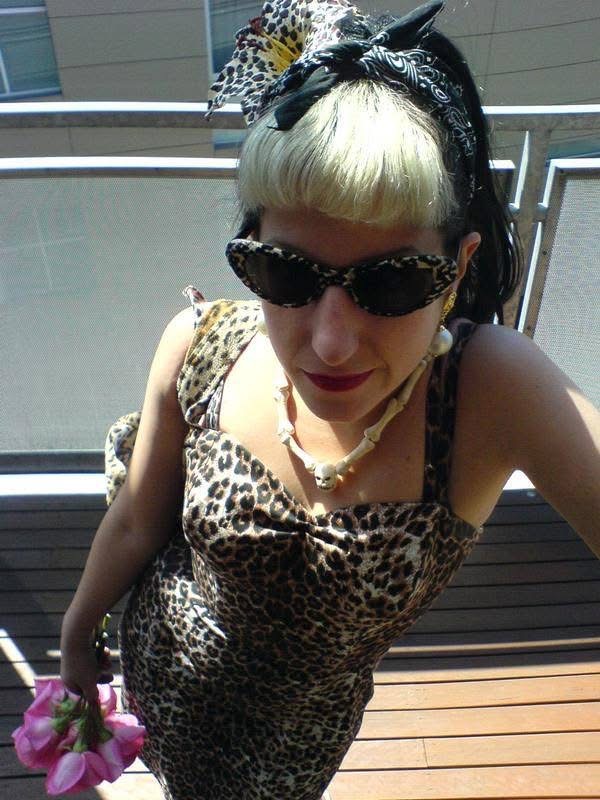
In subcultures, clothing, music, and ways of relating to others often go hand in hand. What role has aesthetics played in your own identity, and how has it evolved over time? Have you got some pictures ? Also how has the “street” perception of your looks change through these decades? I mean, for example common people use to laugh about my leopard coat or 60s minidresses and now I see they don´t care… so.. the perception of “extravanganza” have also change…
For me, the way I look is never just about following a particular fashion. It is about feeling comfortable in my own skin and having the freedom to create my own image. Of course, that has evolved over time. Your style changes as you change, and some things disappear while others stay. But I think there are certain elements that become part of you and never really go away. The looks will always be there in one way or another—maybe they become less about fitting into a subculture and more about simply being yourself.
And some things are non-negotiable: Leopard print till I die.
What advice would you give someone wanting to try vinyl DJ’ing or music playing ?
Follow your passion, be curious, and don’t wait for someone to give you permission to start. If you want to dj, make music, or get involved in a scene, just start exploring. You don’t need to know everything from the beginning. Get involved in the DIY scene. Go to gigs, talk to people, support small clubs, independent labels, record shops, artists, and promoters. Become part of the community rather than only thinking about what you can get from it. You learn so much by being around people who are doing things themselves.
And, most importantly, create your own space. If you can’t find the kind of party, club night, collective, or community you are looking for, build it yourself. Invite people, share music, experiment, make mistakes, and see what happens. You don’t need a huge budget or a perfect plan to create something meaningful. For me, the DIY spirit is about understanding that you have agency. You don’t have to wait for the established industry to open a door for you. You can build your own door—and then leave it open for someone else. And when you do, try to make the space you create the kind of place you would have wanted to find yourself: welcoming, inclusive, curious, and supportive. Bring other people in, especially those who might not always feel represented or given opportunities. The vinyl itself is only part of it. The most important thing is the connection you create through music. Follow what excites you, find your people, and if the space you need doesn’t exist, create it.
Thanks a lot for your attention.

